Join the mailing list
Join!and receive the latest news from Gibraltar Hardware
|  |
Maintenance & Repair
HARDWARE MAINTENANCE & REPAIR
When it comes to equipment maintenance and repair, there are two types
of drummers. Some are meticulous with their gear, methodically lubricating
every moving part, searching for flecks of dust, earnestly polishing.
Others are perhaps the more stereotypical drummers, proudly displaying
the stains and scratches on their equipment like hard-earned battle
scars. No matter which kind of drummer you are, it's important to
know how to perform at least a few basic hardware repairs and maintenance
tips in order to be competitive. Even if you feel ambivalent about
the appearance of your kit, you simply cannot ignore the condition
of your drums. You can have the best technique and flashiest moves
on the planet, but you still won't be able to get a gig unless you
also sound good. Although fresh drumheads and mirror-smooth bearing
edges play a rattling lug or squeaky pedal can effectively nullify
the world's best edges and heads.
Maintenance
Although it is impossible to entirely avoid emergency hardware problems,
you can prevent many of them by practicing a few common-sense maintenance
tips. First of all, use your eyes and ears to determine the condition
of your hardware. IF your pedals squeaks or a stand gets wobbly, it's
time to take a closer look at what's going on. Here are a few suggested
maintenance routines that might take some time to perform, but can
save you money, as well as embarrassment.
Resist Rust. Not only is rust an unsightly nuisance, but it can also
render a piece of hardware useless by freezing moving parts in place.
Rust is created when your hardware is exposed to moisture for a prolonged
period of time. So whenever any kind of fluid spills on your equipment,
wipe it off as soon as you can with a dry cloth, and always store
your gear in a warm, dry place.
Don't use rust remover if rust should develop on a piece of hardware.
Although it will take off rust very nicely, it also does an equally
good job of removing chrome-plating from stands. Your only option
fro combating rust is to scrape it off with a piece of steel wool,
which, unfortunately, will also leave small scrapes on the chrome.
Of course, your best bet is to be as prepared as you can by regularly
polishing your hardware. There are polishes on the market that are
specifically designed for drum-set hardware, although there are a
number of commercial metal polishes that will work equally well. Not
only will polish keep your stand in a pristine condition, but it also
seals them with a moisture-resistant coating.
Keep it lubed. If you play loud and rarely amplify your drums, you
might not even know whether or not your pedals squeak. But you certainly
will find out soon as you go into a recording studio or do a gig where
your drums are miked. The sound of squeaky pedals through P.A. speakers
is reminiscent of fingernails scraping a blackboard, and can make
even the greatest drumming unbearable. Therefore, it's a good idea
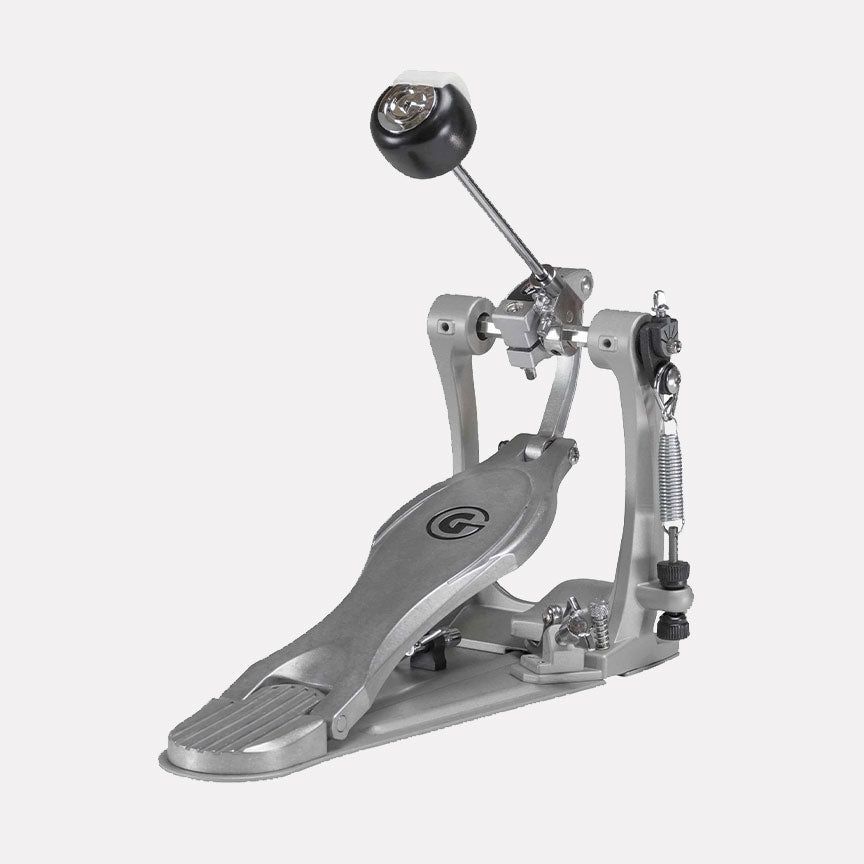
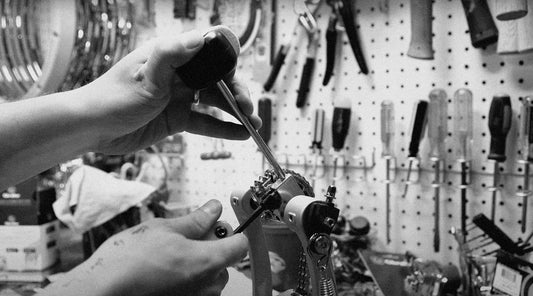
to regularly lubricate all the moving parts on your pedals with some
form of petroleum or even vegetable-based oil. But why stop with your
pedals? Lubricating all the moving parts of your hardware - retractable
tripod legs, wing bolts, even your drum throne - makes setting-up
and tearing-down easier, and extends the life of your equipment.
Spares to Spare. Any piece of drum-set hardware actually is a collection
of parts that are welded, bolted or clamped to one another. Even the
most insignificant-looking wingscrew or spring can cause deceptively
large problems if you allow it to wear out to the point of breaking.
Remember, if something goes wrong with your equipment while you're
on a gig, your professionalism will be measured by how quickly and
efficiently you deal with it. So head-off small problems before they
develop into bigger ones. For example, you should immediately replace
cymbal felts and plastic cymbal sleeves when you start to show signs
of wear. Otherwise you'll allow metal parts of your stands to gouge
into the cymbals, irreparably damaging them. And check the condition
of the springs, beater nut and beater of your bass drum pedals to
avoid losing the use your bass drum in the middle of a song.
It's wise to carry with you a spare snare drum and bass drum pedal
whenever you are working professionally. If you break a tom head,
hi-hat or even a cymbal, you can usually re-orchestrate your drum
parts in such a way that the audience probably won't even notice that
you have problem. But if you suddenly lose the use of you snare or
bass drum, and don't have a spare, you practically can't continue
playing - at least not without sounding like a complete dork. And
even if you have a spare snare head or bass drumhead, you'll still
have to stop playing for at least ten minutes or so while you fumble
around changing heads.
Still, it's a good idea to have an extra full set of heads, as well
as a roll f duct tape, some form of lubrication for your pedals, at
least two drum keys, a screwdriver, a wrench, spare snare strands,
snare tape or string, extra tension rods and washers, a spare bass
drum beater, a second hi-hat clutch, an extra bass pedal strap or
chain, a second bass drum hoop guard, a double-pedal anchor, Velcro
strips to help hold your stands and pedals in place, a clean cloth
rag and cymbal felts. Admittedly, not every drummer can afford all
this spare stuff, or has a large-enough car to lug it around. So try
to choose the spare parts that you will most-likely need, based on
your style of playing and the quality of your equipment.
The Value of Cases. Though it might just seem like an unwelcome, additional
expense after you've laid-down your hard-earned cash on a new kit,
a full set of drum cases is one of the best investments you can make.
Cases will not only protect your equipment from moisture, scratches
and dings, but will also extend the life of your kit, make it infinitely
easier to carry and store and actually will allow you to sell it down-the-line
for a higher price when you want to upgrade to a better set.
There are a number of available case options for hardware. Flight
cases offer the best protection, and feature solid wood sides, internal
padding, casters, heavy-duty retractable handles and a removable or
hinged top that is locked-down with latches. Unfortunately, flight
cases are also rather bulky and impractical for drummers who mostly
play local club gigs. For them, a trap case is the most practical
and perhaps the most standard hardware case one can find. Trap cases
usually have fiberboard sides, a wood base, casters, retractable handles
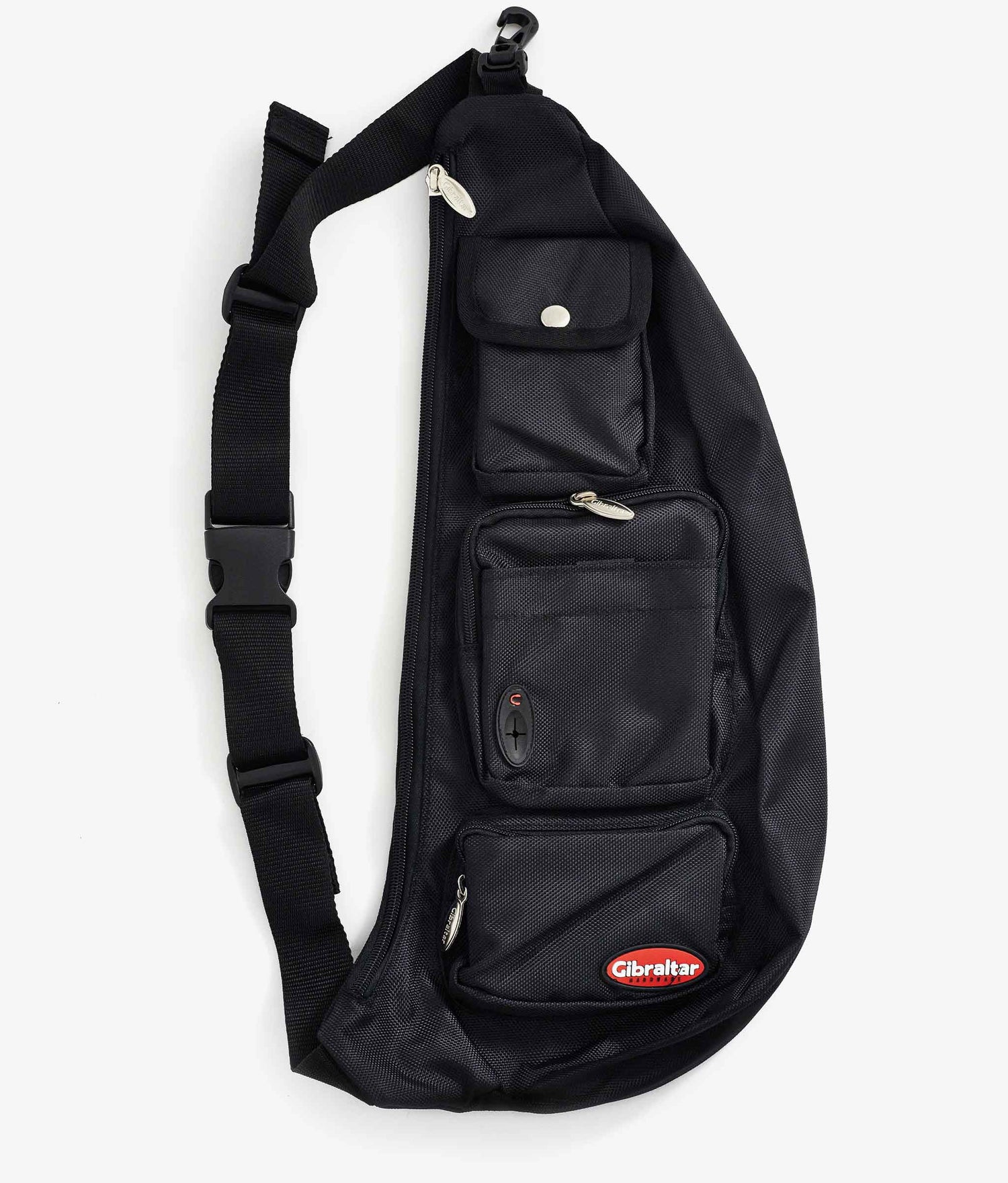
and a removable top that is held by straps. Your next best bet is
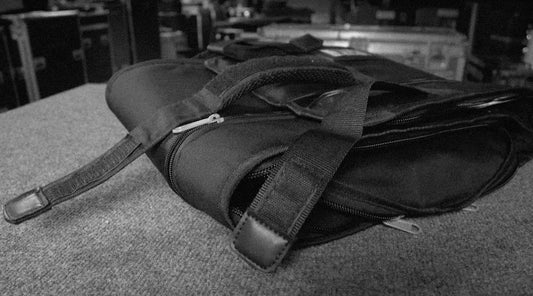
a soft hardware case, which usually has padded vinyl sides, a zippered
top and vinyl handle straps. But even if you can't afford a soft bag
you should still go to an Army surplus store and pick up a duffel
bag for a few dollars to throw your hardware into. Your back and your
gear will thank you for it. |
|
|
|